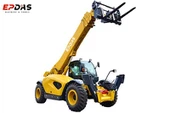
In the operation environments of logistics warehousing, construction, and port loading and unloading, telescopic boom forklifts, with their telescopic boom structure and outstanding lifting performance, have become indispensable key equipment in material handling. However, when abnormal situations such as shaking, unusual noise, boom sinking or height deviation occur during the boom lifting process, not only will the operation efficiency be reduced, but it may also bring safety risks such as goods slipping or equipment overturning.
Industry statistics indicate that certain telescopic boom forklift failures are directly linked to lifting stability issues, with hydraulic system leaks, mechanical structural deformation, and control logic defects being the three primary causes.
This telescopic boom forklift "boom drop" failure not only delays project schedules but also risks load falls. For workers and equipment managers, swiftly identifying and resolving the root cause of "boom drop" is critical to ensuring workplace safety.

The three core reasons for the "arm drop" of telescopic boom forklifts
Mechanical Structural Defects: The "Invisible Killer" of Boom Stability
Wear and Aging of Key Components
The hydraulic cylinder is a key component of the boom system of the telescopic boom forklift, directly affecting the stability and safety of the boom's lifting. When the equipment operates under high load for a long time, the fit clearance between the piston and the cylinder barrel will gradually increase. When the clearance exceeds the design standard, oil leakage may occur inside the cylinder, resulting in a decrease in system pressure, insufficient boom lift or sinking.
In addition, if the piston rod is scratched, bent or its surface is damaged by external force, it will accelerate the wear of the seal and cause the seal to fail. After long-term use, the sealing ring may also lose its elasticity due to aging, making the sealing performance of the system even worse.
Loose Connection
The multi-section boom structure of the telescopic boom is rigidly combined through connecting parts such as pins, bolts and bushings. Under conditions of continuous expansion and contraction movements, rotary operations, and heavy load impacts, structural connection parts are prone to develop fit clearances due to the long-term effect of dynamic loads, resulting in a decrease in preload and weakened connection stability.
When the pins or bolts become loose, the overall rigidity and stability of the boom structure will significantly decline. At this point, there may be slight misalignment or swaying between the segments, causing the direction of force transmission to shift and the center of gravity of the boom to shift. If the offset exceeds the safety limit, it will not only cause the "boom drop" phenomenon, but also may lead to serious safety hazards such as the fall of goods and the deformation of the boom.
Hydraulic system failure
The Hydraulic Oil has Deteriorated
Dust, moisture or metal debris mixed in the oil → wear out precision components and cause pressure fluctuations; The consumption of oil additives and the decline in anti-wear performance will both lead to a "loss of arms".
Oil Oump Failure
Wear of the oil pump gears and plunger → internal oil leakage and insufficient pressure; Seal aging, drive unit failure (motor failure, loose drive belt) → Oil pump stops rotating, losing power support.
Abnormal Control Valve
Valve core jamming and wear → Oil flow obstruction; Spring failure and improper adjustment → abnormal pressure, resulting in "arm loss".
misoperation
Each telescopic forklift truck has clearly defined rated load and lift height limits, which are safety thresholds based on the structural strength design of the equipment. However, some operators, driven by tight deadlines, disregard load limits and perform overloaded operations.
When telehandler loads exceed rated capacity, the boom and hydraulic system endure stresses beyond their design limits. Ultimately, the boom fails to support the load, triggering a "boom drop."
Some operators often engage in illegal operations such as sudden stops and starts, and repeated lifting and lowering of the boom during work. These rough operations can cause severe impacts and significantly increase the risk of "losing the arm".

Troubleshooting the cause of the drop
Preliminary visual screening
Hydraulic oil inspection: Oil level (within the range of the dipstick), oil quality (clear is normal; emulsified/turbid oil needs to be replaced).
Check whether the oil cylinder and oil pipe are leaking oil (the sealing parts may be aged).
Check manually or with a wrench whether the pin shafts and bolts are loose.
Professional equipment inspection
Connect the pressure gauge to the test ports of the control valve and safety valve. After starting the telescopic forklift, monitor the pressure readings. If the pressure falls below the standard range specified in the equipment manual, or if pressure fluctuations exceed ±0.5MPa, this indicates internal leakage in the components.
And then, use ultrasonic flaw detection equipment to inspect critical welds on the boom for cracks. Should any cracks be detected, immediately cease operation of the equipment and have it repaired by qualified personnel through welding.
Troubleshooting Arm Drop Issues in Telescopic Forklifts


Hydraulic System Repair
When the hydraulic oil is contaminated or aged, and it should be thoroughly replaced immediately. At the same time, the oil tank and filter screen should be thoroughly cleaned to ensure that no impurities remain in the system, so as to prevent the new oil from being contaminated again and affecting the normal operation of the hydraulic system.
For common problems such as aging seals, worn oil pumps or faulty control valves, it is necessary to replace the aged seals in a timely manner, and repair or replace the worn oil pumps and faulty control valves. After the replacement is completed, the hydraulic system should be vented to ensure that there is no air left in the system, thereby restoring the sealing performance and pressure stability of the hydraulic system and ensuring the smooth, safe and reliable lifting and lowering of the boom.
Mechanical Structure Repair
Tighten loose pins and bolts to the torque values specified in the equipment manual. Replace new connecting components if threads are worn. When the wear exceeds the specification, replace the slider and piston rod. The weld cracks of the boom were repaired by rewelding and non-destructive testing was carried out to ensure the quality of the repair.
Operational Procedure Correction
Organize specialized training for operators, emphasizing equipment rated load capacity, lifting height limitations, and smooth operation techniques (e.g., avoiding abrupt stops/starts, controlling lifting frequency). Conduct assessments post-training; only qualified personnel may operate equipment, thereby reducing violations at the source.
Conclusion
The core reasons for the "arm drop" of telescopic boom forklifts can be summarized into three categories: mechanical structure defects (component wear, loose connections), hydraulic system failures (oil problems, oil pump/control valve failures), and improper operation (overloading, violation of operating procedures).
To solve the "arm drop" problem, targeted repairs are needed: replace aged components, clean the hydraulic system, and correct operating norms. Long-term prevention relies on regular maintenance and intelligent systems, shifting from "post-event repair" to "pre-event prevention".
By choosing the EPDAS telescopic boom forklift, you not only have a high-performance, stable and durable device, but also enjoy comprehensive after-sales and technical support provided by a professional team, ensuring that every construction is efficient, safe and worry-free.