

Hey there! As a supplier of Drum Type Concrete Mixers, I often get asked if these mixers are suitable for mixing high - strength concrete. Well, let's dive right into this topic and find out.
First off, let's understand what high - strength concrete is. High - strength concrete is a special type of concrete that has a very high compressive strength. Usually, it's used in structures that need to bear heavy loads, like high - rise buildings, large bridges, and industrial facilities. To achieve this high strength, the mix design of high - strength concrete is quite different from normal concrete. It typically contains a lower water - to - cement ratio, more cement, and often includes additives like fly ash, silica fume, or superplasticizers.
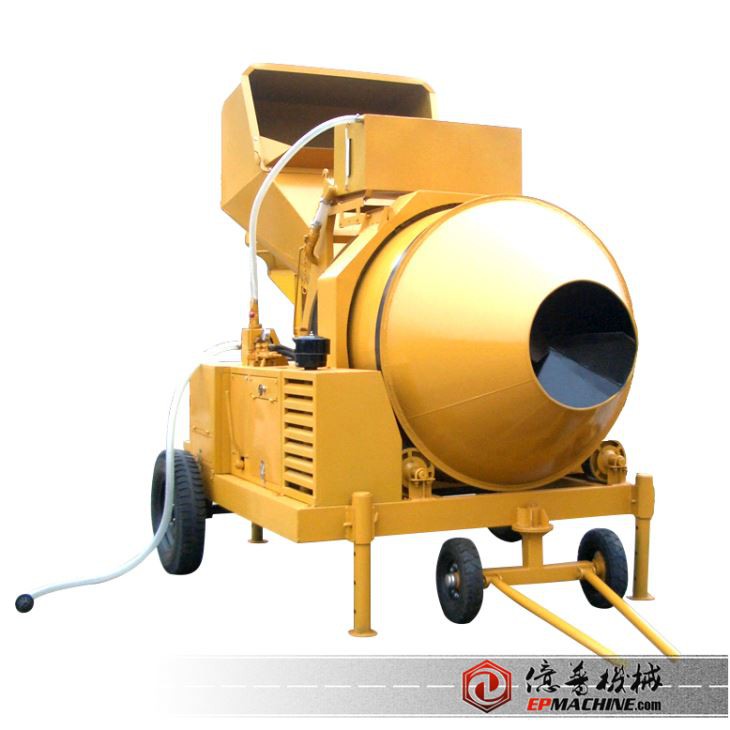
Now, let's talk about Drum Type Concrete Mixers. A Drum Concrete Mixer is one of the most common types of concrete mixers out there. It consists of a rotating drum where the ingredients of concrete - cement, aggregates, water, and additives - are loaded. As the drum rotates, the materials inside are mixed together.
One of the main advantages of a drum type concrete mixer is its simplicity. It's relatively easy to operate and maintain. You just load the materials into the drum, turn it on, and let it do its thing. This simplicity also makes it a cost - effective option for many construction projects.
But when it comes to mixing high - strength concrete, there are some factors we need to consider.
Mixing Efficiency
High - strength concrete requires a very thorough and uniform mixing. The lower water - to - cement ratio means that the materials are less fluid, and it can be a bit tricky to get them well - blended. Drum type mixers rely on the rotation of the drum to mix the materials. While this works fine for normal concrete, it might not be as efficient for high - strength concrete. The mixing action in a drum type mixer can sometimes leave pockets of unmixed materials, especially if the mix is very stiff.
However, modern drum type mixers are designed with improved mixing blades and a better drum shape. These features help to increase the mixing efficiency. The blades are shaped in such a way that they can break up clumps and ensure a more even distribution of the materials. So, with the right design, a drum type mixer can do a decent job of mixing high - strength concrete.
Mixing Time
Another important factor is the mixing time. High - strength concrete usually needs a longer mixing time compared to normal concrete. The drum type mixer needs to run for a sufficient amount of time to ensure that all the materials are properly combined. If the mixing time is too short, the high - strength concrete may not reach its full potential strength.
But here's the catch. Running the drum type mixer for a long time can increase the wear and tear on the machine. The constant rotation of the drum and the friction between the materials and the drum walls can cause the mixer to break down more quickly. So, it's a balance between getting a good mix and not overworking the machine.
Aggregate Size and Shape
The size and shape of the aggregates also play a role. High - strength concrete often uses smaller and more angular aggregates. These aggregates can be more difficult to mix compared to larger, rounded ones. The drum type mixer needs to be able to handle these aggregates without causing segregation.
Some drum type mixers have limitations when it comes to the size of the aggregates they can handle. If the aggregates are too large, they may not be properly mixed, and this can affect the quality of the high - strength concrete. However, there are drum type mixers that are specifically designed to handle a wide range of aggregate sizes, so you need to choose the right one for your project.
Additives
As I mentioned earlier, high - strength concrete often contains additives like fly ash, silica fume, or superplasticizers. These additives need to be evenly distributed throughout the mix. Drum type mixers can sometimes have trouble mixing these additives uniformly, especially if they are added in small amounts.
But again, with proper planning and the right mixing techniques, it's possible to get a good mix. For example, you can pre - mix the additives with some of the water before adding them to the drum. This can help to ensure a more even distribution.
Batch Size
The batch size is also crucial. Drum type mixers come in different sizes, and you need to choose the right one for your project. If the batch size is too large, the mixer may not be able to mix the high - strength concrete properly. On the other hand, if the batch size is too small, it may not be cost - effective.
Now, let's talk about Diesel Concrete Mixer. Diesel concrete mixers are a type of drum type mixer that are powered by a diesel engine. They are a popular choice for construction sites where there is no access to electricity.
The advantage of a diesel concrete mixer is its portability. You can take it to remote locations and still be able to mix concrete. When it comes to mixing high - strength concrete, a diesel concrete mixer has the same pros and cons as a regular drum type mixer. The diesel engine provides the power needed to run the mixer, but you still need to consider the mixing efficiency, time, and other factors.

Conclusion
So, is a drum type concrete mixer suitable for mixing high - strength concrete? The answer is yes, but with some caveats. It can be a viable option if you choose the right mixer, pay attention to the mixing parameters, and take the necessary precautions.
If you have a small - to - medium - sized project where high - strength concrete is required, a drum type mixer can be a good choice. It offers simplicity, cost - effectiveness, and with the right design, it can produce a high - quality mix.
However, for large - scale projects or projects where extremely high - quality high - strength concrete is needed, you might want to consider other types of mixers, like planetary mixers or twin - shaft mixers. These mixers are specifically designed for more demanding mixing tasks and can provide a more uniform and thorough mix.
If you're in the market for a drum type concrete mixer for your high - strength concrete projects, I'd love to help. I can offer you a range of drum type mixers that are designed to meet different needs. Whether you need a small, portable diesel concrete mixer or a larger, more powerful electric mixer, I've got you covered. Just get in touch, and we can discuss your requirements and find the perfect mixer for your project.
References
- Neville, A. M. (1995). Properties of Concrete. Pearson Education.
- ACI Committee 363. (2000). State - of - the - Art Report on High - Strength Concrete. American Concrete Institute.