

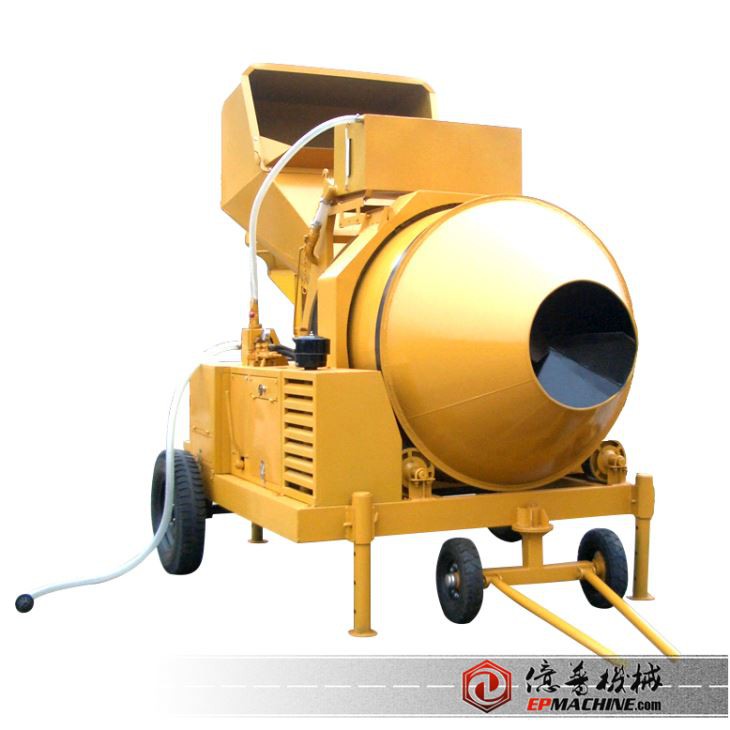
Hey there! As a supplier of Drum Type Concrete Mixers, I know how crucial it is to get the water - adding amount right in these machines. In this blog, I'm gonna share some tips on how you can adjust the water - adding amount in a drum type concrete mixer effectively.
First off, let's understand why the water - adding amount matters so much. The water in a concrete mix plays a vital role. It reacts with cement through a process called hydration, which is what makes the concrete harden and gain strength. If you add too little water, the concrete won't be workable enough. It'll be dry, crumbly, and difficult to pour and shape. On the other hand, if you add too much water, the concrete will be too runny. This can lead to a weaker final product as the excess water evaporates, leaving behind pores and reducing the overall strength of the concrete.

So, how do we start adjusting the water - adding amount? Well, it all begins with the concrete mix design. Different construction projects require different types of concrete, each with its own specific water - cement ratio. The water - cement ratio is the amount of water compared to the amount of cement in the mix. Industry standards usually recommend a water - cement ratio somewhere between 0.4 and 0.6 for most common construction projects. But this ratio can vary depending on factors like the type of cement used, the aggregates' characteristics, and the desired workability of the concrete.
Before you start mixing, it's essential to consider the moisture content of the aggregates. Aggregates, such as sand and gravel, can hold a significant amount of water. If you use wet aggregates without accounting for their moisture, you'll end up adding too much water to the mix. To deal with this, you can measure the moisture content of the aggregates using a moisture meter. This device will give you an accurate reading of how much water the aggregates already contain. Once you know this, you can adjust the amount of additional water you add to the mixer accordingly.
When it comes to adding the water, you should do it gradually. Don't just pour in all the water at once. Start by adding a small amount of water to the mixer along with the dry ingredients (cement, aggregates). Then, start the mixer and let it run for a few minutes. During this time, the materials should start to blend together. You can then check the workability of the mix. Workability refers to how easily the concrete can be mixed, transported, placed, and compacted.
A simple way to check workability is by using the slump test. For this test, you'll need a slump cone, which is a cone - shaped mold. Fill the cone with the freshly mixed concrete in three layers, tamping each layer with a rod to ensure proper compaction. Then, carefully lift the cone vertically, allowing the concrete to slump. The difference in height between the original height of the cone and the height of the slumped concrete is the slump value.
The slump value gives you an idea of the workability of the concrete. For a normal construction project, a slump value between 4 and 6 inches is typically desirable. If the slump is too low, meaning the concrete is too stiff, you can add a little more water to the mixer and let it run for a few more minutes before retesting the slump. Conversely, if the slump is too high, indicating that the concrete is too runny, you may need to add some more dry ingredients like cement or aggregates to absorb the excess water.
Another factor to keep in mind is the environmental conditions. Temperature and humidity can greatly affect the water - adding amount. In hot and dry weather, water evaporates more quickly from the concrete mix. This means you may need to add a little extra water to compensate for the evaporation. You should also try to mix the concrete as quickly as possible and cover it during transportation to reduce water loss.
On the other hand, in cold and humid weather, the evaporation rate is lower. You may need to add less water than usual. Additionally, in cold weather, you need to be careful as the water can freeze in the mix, which can cause damage to the concrete. You may need to use additives or heat the water before adding it to the mixer to prevent freezing.
Now, let's talk about the equipment features that can help with water - adding adjustment. Modern drum type concrete mixers often come with water - metering devices. These devices allow you to precisely control the amount of water added to the mixer. Some mixers even have automated systems that can adjust the water - adding amount based on pre - set parameters.
If you're in the market for a drum type concrete mixer, we have some great options. Check out our Diesel Concrete Mixer for a powerful and reliable choice. Or, if you're looking for a more standard option, take a look at our Drum Concrete Mixer.
In conclusion, adjusting the water - adding amount in a drum type concrete mixer requires a combination of knowledge, careful measurement, and a bit of trial and error. By following the steps I've outlined above, considering factors like mix design, aggregate moisture, environmental conditions, and using the right equipment features, you can ensure that your concrete mix has the right workability and strength.
If you're interested in purchasing a drum type concrete mixer or have any questions about water - adding adjustment or our products, don't hesitate to reach out. We're here to help you get the best results for your construction projects and make sure you're satisfied with your purchase. Let's start a conversation and discuss how our drum type concrete mixers can meet your needs.
References
- Concrete Technology textbooks
- Industry standards and guidelines on concrete mixing