

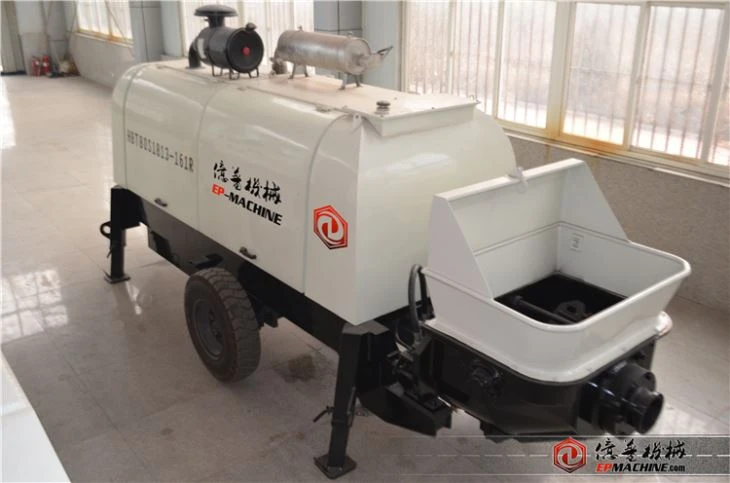
As a supplier of the HBT40 Concrete Pump, I often get asked whether this powerful construction machine can be powered by electricity. In this blog post, I'll delve into this question, exploring the technical aspects, advantages, and potential limitations of using electricity to power the HBT40 Concrete Pump.

Technical Feasibility
The HBT40 Concrete Pump is a popular choice in the construction industry due to its efficiency and reliability. When it comes to power sources, traditionally, concrete pumps have been powered by diesel engines. However, with the advancement of technology, electric - powered options have become increasingly feasible.
The HBT40 Concrete Pump can indeed be powered by electricity. Electric motors offer a clean and quiet alternative to diesel engines. They operate on a simple principle: electrical energy is converted into mechanical energy. In the case of the HBT40, an electric motor can drive the hydraulic system, which in turn powers the pumping mechanism that moves the concrete.
The electrical power requirements of the HBT40 Concrete Pump depend on its specific design and the workload. Most modern electric - powered HBT40 pumps are designed to operate on standard industrial electrical supplies. For example, they can be connected to a three - phase electrical system, which is commonly available at construction sites. This ensures a stable and sufficient power supply to drive the pump effectively.
Advantages of Electric - Powered HBT40 Concrete Pump
Environmental Friendliness
One of the most significant advantages of using an electric - powered HBT40 Concrete Pump is its environmental impact. Diesel engines emit harmful pollutants such as particulate matter, nitrogen oxides, and carbon monoxide. In contrast, electric motors produce zero emissions at the point of use. This makes the electric - powered HBT40 a more sustainable choice, especially in urban construction sites where air quality is a concern. It also helps construction companies meet environmental regulations and reduce their carbon footprint.
Lower Operating Costs
Electricity is generally cheaper than diesel fuel, which can result in significant cost savings over the long term. Additionally, electric motors have fewer moving parts compared to diesel engines, which means less maintenance and lower maintenance costs. There is no need for oil changes, fuel filter replacements, or exhaust system maintenance. This not only reduces the overall operating costs but also minimizes downtime, allowing for more continuous operation of the pump.
Quiet Operation
Electric motors are much quieter than diesel engines. This is a major advantage in construction sites located near residential areas or in noise - sensitive environments. The reduced noise level not only improves the working conditions for the operators but also minimizes the disturbance to the surrounding community. It allows construction work to be carried out during restricted hours without causing excessive noise pollution.
Potential Limitations
Power Availability
One of the main challenges of using an electric - powered HBT40 Concrete Pump is the availability of a reliable power source. In some remote construction sites, access to a stable electrical supply may be limited. There may be issues with power outages, insufficient voltage, or a lack of proper electrical infrastructure. In such cases, a diesel - powered pump may be a more practical choice. However, with the increasing expansion of the electrical grid and the use of portable generators, this limitation can be mitigated to some extent.
Initial Investment
The initial cost of an electric - powered HBT40 Concrete Pump may be higher than that of a diesel - powered one. Electric motors and the associated electrical control systems are more complex and expensive to manufacture. However, when considering the long - term savings in operating costs and environmental benefits, the higher initial investment can be justified.
Comparison with Other Concrete Pumps
When comparing the electric - powered HBT40 Concrete Pump with other models, such as the HBT60 Concrete Pump, the main difference lies in the pumping capacity. The HBT60 has a higher pumping capacity than the HBT40, which means it can handle larger volumes of concrete in a shorter period. However, both pumps can be available in electric - powered versions. The choice between the two depends on the specific requirements of the construction project, such as the size of the project, the distance of concrete transportation, and the required pumping rate.
Another option in the market is the Shotcrete Pump For Sale. Shotcrete pumps are designed for spraying concrete onto surfaces, which is different from the traditional pumping of concrete into forms. While the HBT40 is a general - purpose concrete pump, the shotcrete pump has a more specialized application. Similar to the HBT40, shotcrete pumps can also be available in electric - powered models, offering the same advantages of environmental friendliness and lower operating costs.
Conclusion
In conclusion, the HBT40 Concrete Pump can be effectively powered by electricity. The electric - powered version offers numerous advantages, including environmental friendliness, lower operating costs, and quiet operation. While there are some potential limitations, such as power availability and higher initial investment, these can be managed with proper planning and infrastructure.
If you are in the market for a reliable and efficient concrete pump, the HBT40 Concrete Pump is a great choice. Whether you opt for the electric - powered or diesel - powered version depends on your specific project requirements and the availability of resources.
If you have any questions or are interested in purchasing an HBT40 Concrete Pump, feel free to reach out. We are here to assist you in making the right decision for your construction needs.
References
- Construction Equipment Handbook: A comprehensive guide to various construction equipment, including concrete pumps.
- Industry reports on the development of electric - powered construction machinery.