

Concrete pumping is a critical operation in many construction projects, including building high - rise structures, bridges, and most notably, tunnels. When it comes to tunnel construction, the choice of equipment can significantly impact the efficiency, cost - effectiveness, and safety of the project. As a supplier of stationary concrete pumps, the question “Can a stationary concrete pump be used for tunnel construction?” is one that I get asked quite often. In this blog post, I will delve into the technical aspects, advantages, challenges, and real - world applications of using stationary concrete pumps in tunnel projects.
Technical Feasibility of Stationary Concrete Pumps in Tunnel Construction
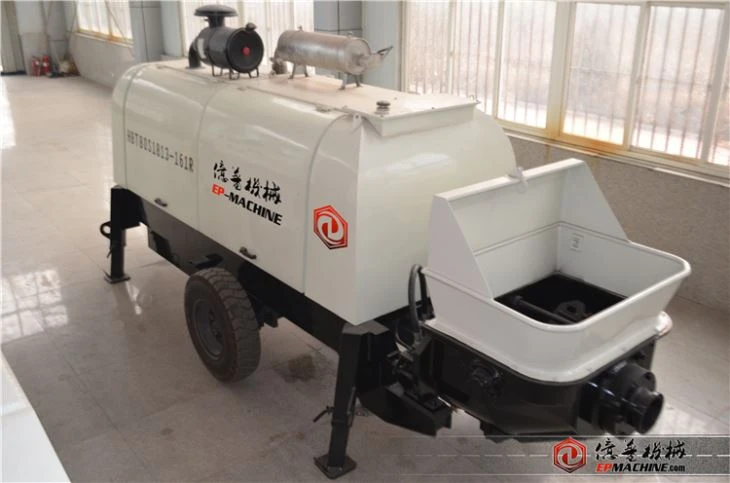
Stationary concrete pumps are designed to transport liquid concrete from a mixer to the placement point. They operate on a fixed location and use a system of pipes and hoses to deliver the concrete. In tunnel construction, this fixed - position operation can be highly beneficial. Tunnels are often long and narrow structures, which means that a stationary pump can be strategically placed at a suitable location within the tunnel or at the tunnel entrance.
The pumping capacity and pressure of stationary concrete pumps are important factors in tunnel construction. Most modern stationary concrete pumps can generate enough pressure to transport concrete over long distances and to significant heights. For example, our Stationary Concrete Pump is engineered to provide a high - pressure output, enabling it to pump concrete through the long pipes and around the bends commonly found in tunnel layouts. This high - pressure capability ensures that the concrete can reach the required pouring points deep within the tunnel.

Advantages of Using Stationary Concrete Pumps in Tunnel Construction
Cost - Efficiency
One of the most significant advantages of using stationary concrete pumps in tunnel construction is cost - efficiency. Since these pumps are stationary, they require less initial investment compared to mobile concrete pumps. There is no need for the additional components and machinery associated with mobility, such as engines for self - propulsion and complex steering systems. This lower upfront cost can result in substantial savings, especially for large - scale tunnel projects.
Moreover, stationary concrete pumps have lower operating costs. They consume less fuel compared to mobile pumps because they do not have to power a moving vehicle. The reduced fuel consumption translates into long - term savings for the construction company. Additionally, the maintenance of stationary pumps is generally simpler and less expensive as they have fewer moving parts and a more straightforward design.
Precision and Control
Another major advantage is the high level of precision and control. In tunnel construction, the accurate placement of concrete is crucial. Stationary concrete pumps allow for better control over the flow rate and pressure of the concrete. Operators can adjust these parameters according to the specific requirements of different sections of the tunnel, such as areas with complex geometries or sensitive structures.
For instance, when pouring concrete for the tunnel lining, a consistent and controlled flow of concrete is necessary to ensure a smooth and uniform finish. Our HBT40 Concrete Pump is equipped with advanced control systems that enable operators to fine - tune the pumping process, resulting in high - quality concrete placement.
Stability
Stationary concrete pumps offer superior stability compared to their mobile counterparts. In the confined space of a tunnel, a stable pump is essential. The fixed position of a stationary pump eliminates the risk of movement during the pumping process, which could lead to problems such as pipe disconnection or uneven concrete distribution. This stability ensures a continuous and reliable supply of concrete, which is vital for maintaining the progress of the tunnel construction.
Challenges of Using Stationary Concrete Pumps in Tunnel Construction
Limited Mobility
The most obvious challenge of using stationary concrete pumps in tunnel construction is their lack of mobility. Once a stationary pump is set up, it cannot be easily moved to a different location. In tunnels where the construction progress requires the pouring of concrete at multiple points, this can be a drawback. However, this issue can be mitigated by careful planning. By strategically positioning the pump at the beginning of the project and using an appropriate network of pipes and hoses, it is possible to cover a large area of the tunnel.
Pipe Layout
Another challenge is the pipe layout. Tunnels often have complex geometries, including curves and slopes. Designing an efficient pipe layout that can navigate these obstacles while maintaining the proper flow of concrete is a technical challenge. The pipes need to be properly supported and secured to prevent blockages and ensure the smooth movement of concrete. Our engineering team has extensive experience in designing pipe layouts for tunnel projects, and our HBT60 Concrete Pump is compatible with a wide range of pipe configurations.
Real - World Applications
There are numerous successful examples of stationary concrete pumps being used in tunnel construction around the world. For example, in a large - scale subway tunnel project, stationary concrete pumps were used to pour the concrete for the tunnel walls and floors. The pumps were placed at the entrance of the tunnel, and a well - designed pipe network was used to transport the concrete to different sections of the tunnel. The high - pressure output of the pumps ensured that the concrete could reach the far - end of the tunnel, even with the presence of multiple bends in the pipe.
In a mountain tunnel project, stationary concrete pumps were used to construct the tunnel lining. The precision and control offered by the pumps were crucial in ensuring a high - quality finish. The stable operation of the pumps also contributed to the overall safety and efficiency of the project.
Conclusion and Invitation to Contact
In conclusion, stationary concrete pumps can indeed be used for tunnel construction, offering several advantages such as cost - efficiency, precision, and stability. While there are challenges associated with their use, these can be effectively addressed through proper planning and the use of high - quality equipment.
If you are involved in a tunnel construction project and are considering using a stationary concrete pump, I encourage you to contact us for more information. Our team of experts can provide detailed guidance on the selection, installation, and operation of our stationary concrete pumps. We are committed to helping you achieve a successful and cost - effective construction project.
References
- Construction Equipment Handbook, 2023 Edition
- Journal of Tunnel Engineering and Technology, Volume 15, 2022
- International Conference on Concrete Pumping and Placement Proceedings, 2021