

Hey there! As a supplier of transit mixers, I often get asked this question: "How long does it take to mix concrete in a transit mixer?" Well, let's dive right into it and break down the factors that influence the mixing time.
First off, let's understand what a transit mixer is. A Concrete Transit Mixer is a specialized vehicle designed to transport and mix concrete on the go. It's got a big rotating drum where all the magic happens. The drum keeps the concrete in a constant state of motion, preventing it from setting prematurely.
Now, the time it takes to mix concrete in a transit mixer isn't set in stone. It depends on several key factors. One of the most important factors is the type of concrete mix. Different concrete mixes have different requirements. For example, a standard concrete mix with a normal slump (the measure of the consistency of the concrete) might take around 5 to 7 minutes to mix thoroughly in a transit mixer. But if you're dealing with a high - strength or a special - purpose concrete mix, it could take longer, maybe 8 to 10 minutes or even more.

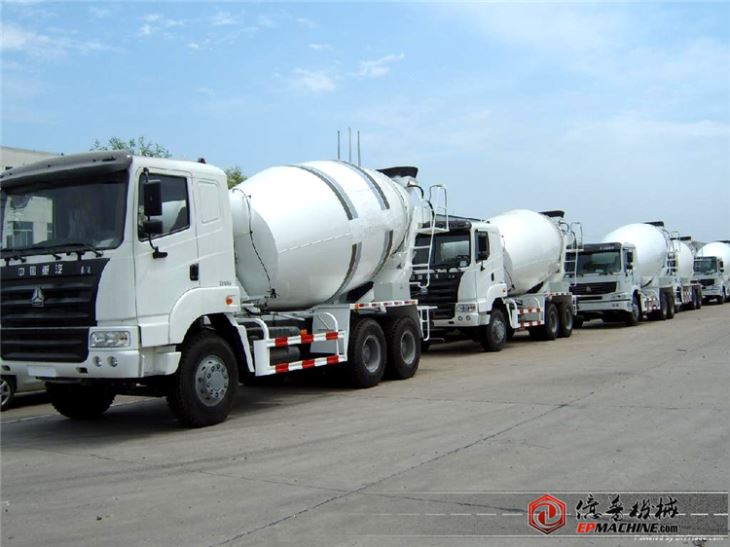
The size of the transit mixer also plays a role. Larger transit mixers, like our Howo Transit Mixer, can hold more concrete. While they have more powerful mixing mechanisms, it still takes a bit longer to ensure that all the ingredients are evenly distributed throughout the larger volume of concrete. A smaller transit mixer might be able to mix the same type of concrete a bit faster, but it has a lower capacity.
The speed of the drum rotation is another crucial factor. Most transit mixers have adjustable drum rotation speeds. A faster rotation speed can reduce the mixing time, but it has to be balanced. If the rotation is too fast, it can cause the aggregate (the gravel and sand in the concrete) to separate from the cement paste, leading to an uneven mix. On average, a moderate rotation speed is usually set to achieve the best results in terms of mixing efficiency and quality.
The initial state of the ingredients also matters. If the aggregates are wet or if the cement has clumps, it will take longer to mix them properly. That's why it's important to ensure that the ingredients are in good condition before loading them into the transit mixer. Sometimes, pre - mixing the dry ingredients at the batching plant can also help reduce the overall mixing time in the transit mixer.
Let's talk about the mixing process step - by - step. When the transit mixer arrives at the batching plant, the first step is to load the ingredients. This usually includes cement, aggregates (sand and gravel), water, and sometimes additives. Once all the ingredients are loaded, the drum starts rotating. At the beginning, the rotation is often set at a slower speed to start the mixing process gently. As the mixing progresses, the speed might be adjusted to ensure that all the ingredients are thoroughly combined.
During the mixing process, it's important to monitor the concrete. You can do this by taking samples at different intervals. A well - mixed concrete should have a uniform color and consistency. If you notice any signs of segregation or unevenness, you might need to extend the mixing time or adjust the rotation speed.
In some cases, the distance to the construction site can also affect the mixing time. If the site is far away, the transit mixer has more time to mix the concrete during transportation. However, you have to be careful not to over - mix the concrete, as this can also lead to problems. Over - mixing can cause the concrete to lose its workability and strength.
Now, let's consider some real - world scenarios. For a small residential construction project, where the demand for concrete is relatively low, a smaller transit mixer might be used. The mixing time for a small batch of standard concrete could be around 5 minutes. This is usually sufficient to get a good - quality mix for tasks like pouring a small patio or a driveway.
On the other hand, for a large commercial construction project, like building a high - rise building or a bridge, a larger transit mixer is required. The mixing time for a large batch of high - strength concrete could be 10 minutes or more. These projects often have strict quality requirements, so it's essential to ensure that the concrete is mixed perfectly.
As a transit mixer supplier, we understand the importance of providing equipment that can mix concrete efficiently. Our transit mixers are designed with the latest technology to ensure optimal mixing performance. We offer a range of models to suit different project needs, whether it's a small - scale job or a large - scale construction project.
If you're in the market for a transit mixer, you need to consider your specific requirements. Think about the volume of concrete you'll need to mix, the type of concrete mixes you'll be using, and the distance to your construction sites. Our team of experts can help you choose the right transit mixer for your needs.
We also provide after - sales support, including maintenance and training. We want to make sure that you get the most out of your transit mixer and that it operates smoothly for years to come.
So, if you're interested in learning more about our transit mixers or have any questions about the concrete mixing process, don't hesitate to get in touch. Whether you're a contractor, a builder, or someone involved in the construction industry, we're here to help you find the best solution for your concrete mixing needs. Contact us today to start a discussion about your project and how our transit mixers can make your job easier and more efficient.
References
- Concrete Technology Books
- Transit Mixer Manufacturer's Manuals
- Construction Industry Best Practices Guides